


Fort Collins trees face more threats than you realize
Drought-stressed trees are at risk of being attacked by native beetles as well as invasive insect species coming into Colorado from other states. The soils in Northern Colorado are also very alkaline, which causes trees to become deficient in necessary micronutrients. A seemingly healthy tree could be sick or dying before the homeowner is aware of the problem.
This is why regular tree pest management and fertilization are so important. It's not about waiting for an emergency; it's ongoing care that keeps problems from taking root in the first place.
Understanding the Threats to Fort Collins Trees
The most discussed invasive pest currently in this area is the Emerald Ash Borer (EAB), a small metallic green beetle which has continued to spread throughout the Front Range.
The EAB lays eggs beneath the bark of ash trees; the larvae then tunnel through the vascular system where water and nutrients are carried resulting in death of the ash tree typically within a year or two after infestation.
If you own an ash tree in Fort Collins, catching an infestation early is the difference between treatment and removal, and it helps to know exactly what to look for.


Why Fort Collins Trusts Our Tree Pest Control & Fertilization Service
When it comes to tree pest control and fertilization, we don’t believe in treating every tree the same or recommending treatments just for the sake of it.
Our approach is backed by real expertise, including a Board Certified Master Arborist designation, a Master’s degree in Forestry, and an ISA Tree Risk Assessment Qualification. Those credentials help us look beyond surface symptoms, understand what may actually be stressing the tree, and recommend care that makes sense for its condition.
As a family-owned business based in Fort Collins, we’ve also seen firsthand how Northern Colorado conditions affect tree health. Drought, hail, alkaline soils, temperature swings, and pest pressure can all play a role. That local experience helps us make more informed recommendations and focus on treatments that support healthier, stronger trees over time.

Why Tree Fertilization Matters as Much as Pest Control
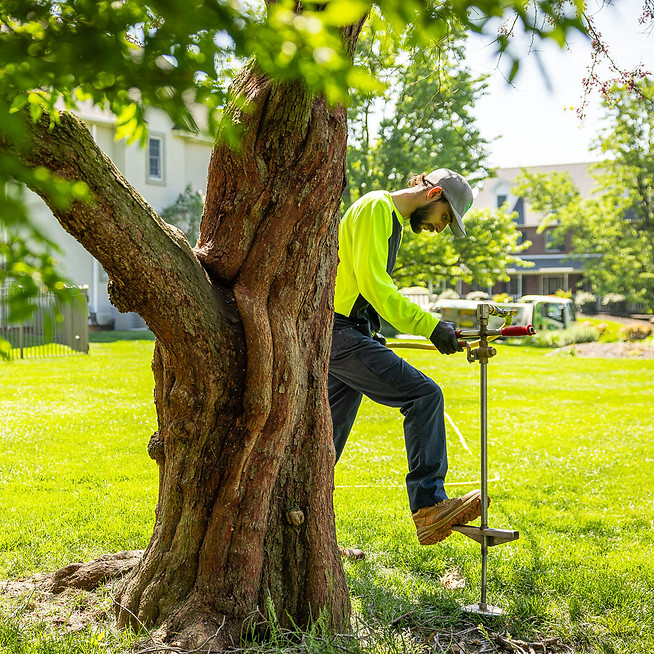
Tree fertilization is just as important as pest control, and the two are often more connected than people expect. A tree that's iron-deficient or under-fertilized has fewer resources to defend itself against insects and disease, which is why we treat fertilization as part of pest management rather than a separate add-on.
Deep-root fertilization provides nutrients directly into the soil at the root zone, so it will be available for absorption by the roots. For trees that show symptoms of chlorosis (yellow leaves), iron trunk injection may improve the color of the leaves that surface fertilizers cannot address.
Timing matters too. The best time to fertilize trees in Colorado is typically late fall, after leaf drop, or early spring before new growth begins. This gives roots time to take up nutrients without pushing tender new growth into a late frost. Fertilizing at the wrong time of year can do more harm than good, which is one of the reasons this isn't a task most homeowners want to guess at on their own.
Signs of Emerald Ash Borer Infestation
Catching an infestation early makes all the difference, and there are a few signs worth watching for:
-
Canopy dieback that starts at the very top of the tree and works its way down, since that's where larvae first cut off the flow of water and nutrients.
-
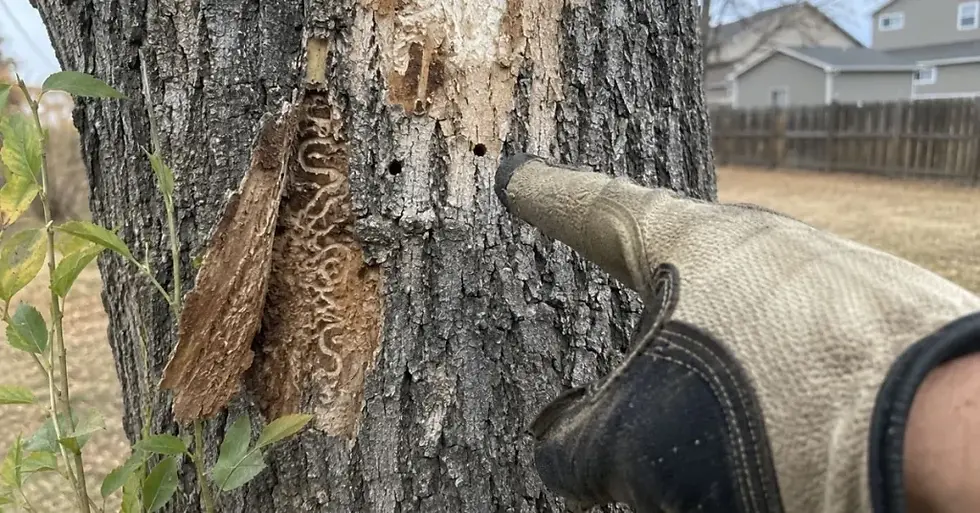
D-shaped exit holes in the bark, roughly the size of a grain of rice, where adult beetles have chewed their way out.
-
Splitting or cracking bark revealing S-shaped tunnels, called galleries, carved by feeding larvae underneath.
-
Increased woodpecker activity on one particular tree. They flake away bark to reach the larvae inside, a behavior arborists call blonding, for the lighter wood it exposes.
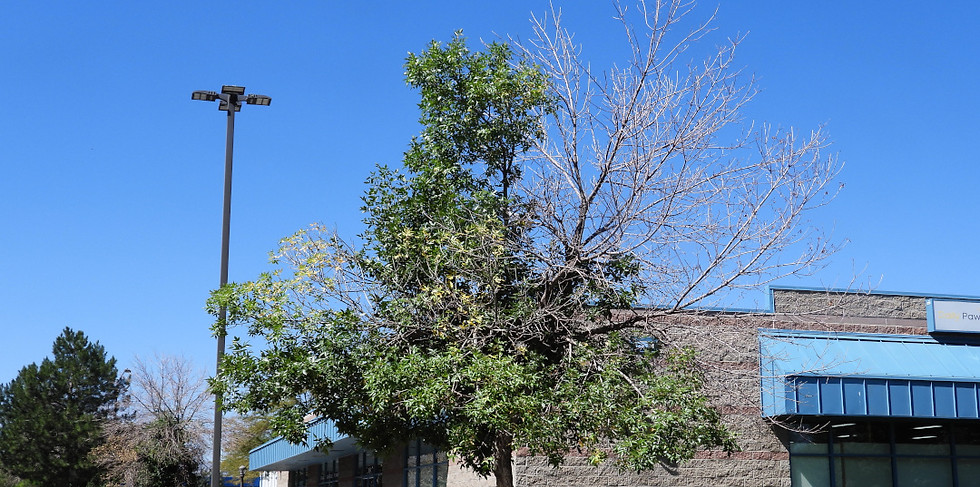
Once an ash tree loses more than half of its leaves, there are few treatments to save it, therefore the sooner we are able to evaluate it, the greater the chances for a positive result.
Fort Collins has also experienced a recent increase in the Ips Beetle that attacks stressed Spruce Trees due to drought conditions or poor watering practices.
How to Protect Spruce Trees from Ips Beetle
Since drought stress is one of the biggest triggers, a few consistent habits go a long way:
-
Water deeply through the growing season, about two gallons per inch of trunk diameter, applied at the root zone.
-
Remove dead or diseased limbs to keep the tree's energy focused on healthy growth.
-
Clear away fresh-cut or storm-damaged wood promptly. It attracts beetles.
-
Consider a preventive trunk injection or spray before spring flight season if Ips activity has been confirmed nearby.
Termites in Colorado typically target dead or decaying wood rather than healthy trees. Mud tubes or hollow areas on stumps and dead limbs should still be inspected and removed to reduce the risk of spread.
Fort Collins trees can also develop iron chlorosis because alkaline soils prevent roots from absorbing available iron. A common sign is yellowing leaves with green veins, especially in maples, oaks, and other species sensitive to high-pH soil.

Best Time to Fertilize Trees in Colorado
Getting the timing right makes a real difference in how well a tree can use what you give it:
-
Early spring through June, while the tree is waking up and can put nutrients to immediate use.
-
Fall, after the leaves drop and before the ground freezes, so roots can store nutrients through the dormant season.
-
Late summer is best avoided, since fertilizing then can push out tender new growth that won't have time to harden off before the first frost hits.
We prefer to determine what a tree needs by analyzing deficiencies in soils that are drastically different for each lawn around here before suggesting fertilizers.
Since over-fertilization is equally damaging to a neglected tree, this job is more about identifying specific areas where the tree lacks nutrients and less about taking an educated guess.
How We Approach Tree Pest Control and Fertilization
As ISA certified arborists, we don't treat every tree the same way. Whether it's emerald ash borer control, Ips beetle prevention, or a fertilization plan for a chlorotic maple, here's how we work through it, from the first visit to the last treatment.
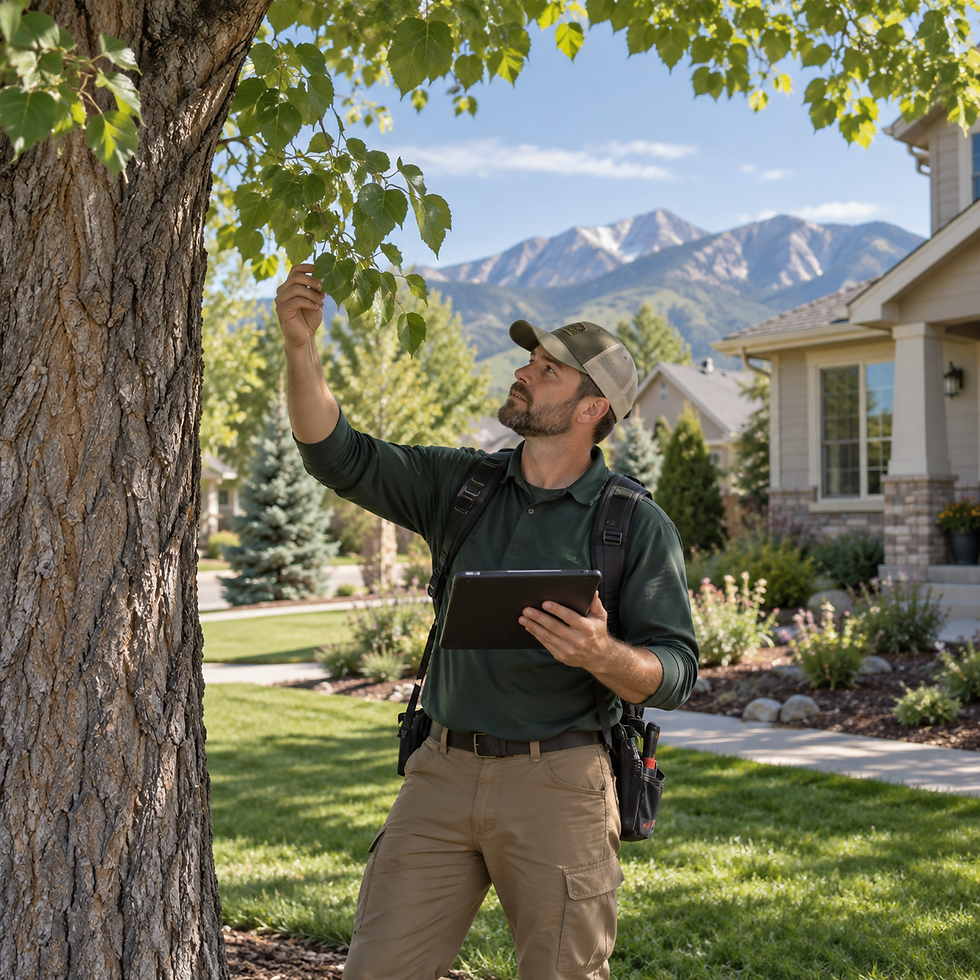
On-Site Assessment
We visit your property to identify the pest or deficiency and how advanced it is before recommending anything.
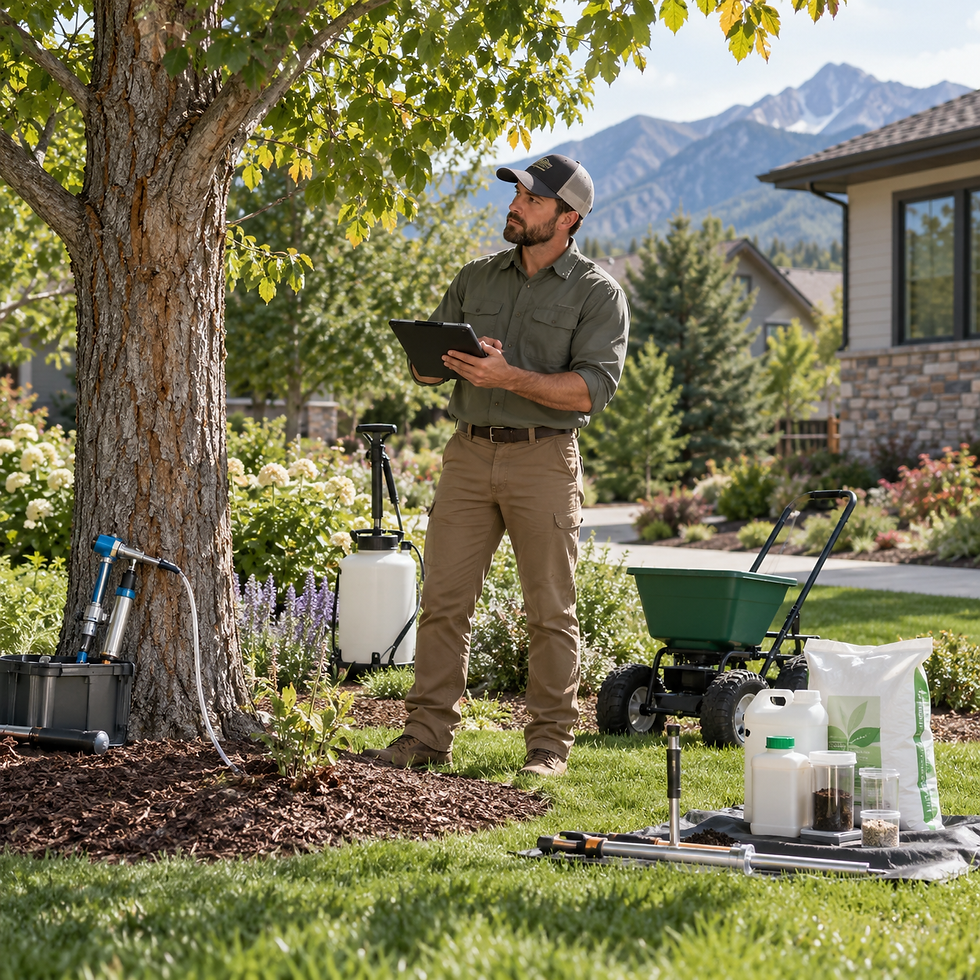
Tailored Treatment Plan
Trunk injections, soil treatments, foliar sprays, or fertilization, chosen to match your tree and your soil.
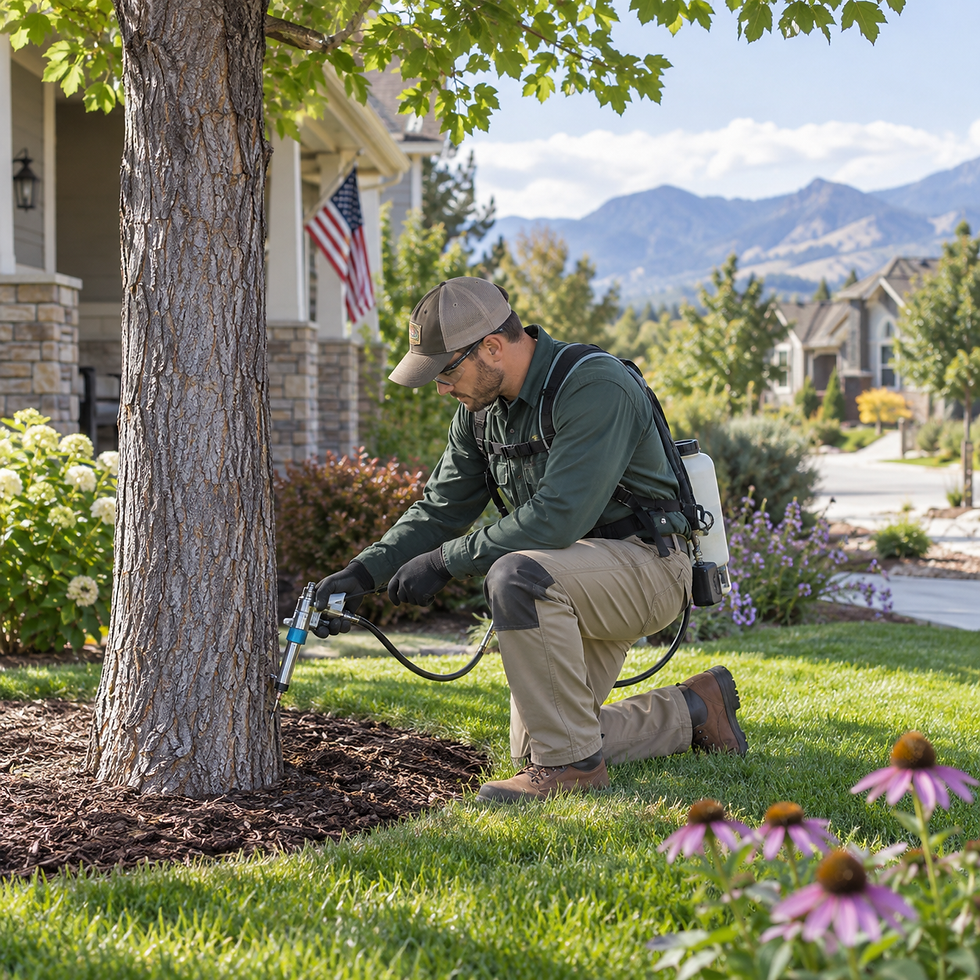
Targeted, Careful Application
We apply treatments precisely, protecting
your yard, pets, and pollinators along the way with careful attention.
Tree Care You Can Rely On
Tree care in Fort Collins means understanding this specific climate, this specific soil, and the pests that have adapted to both. That's the kind of tree care service our certified arborists have built a reputation on, care that's rooted in what actually works here and not a one-size-fits-all program.
We’re happy to come out and inspect your trees if you’ve been noticing yellowing leaves, thinning branches, small holes in the bark, or simply would like an experienced pair of eyes looking before a minor issue develops into something larger.
Reach out for a free consultation, and we'll let you know exactly what your trees need, and just as importantly, what they don't.
